20-Inch Front-Opening Carry-On with Password Lock
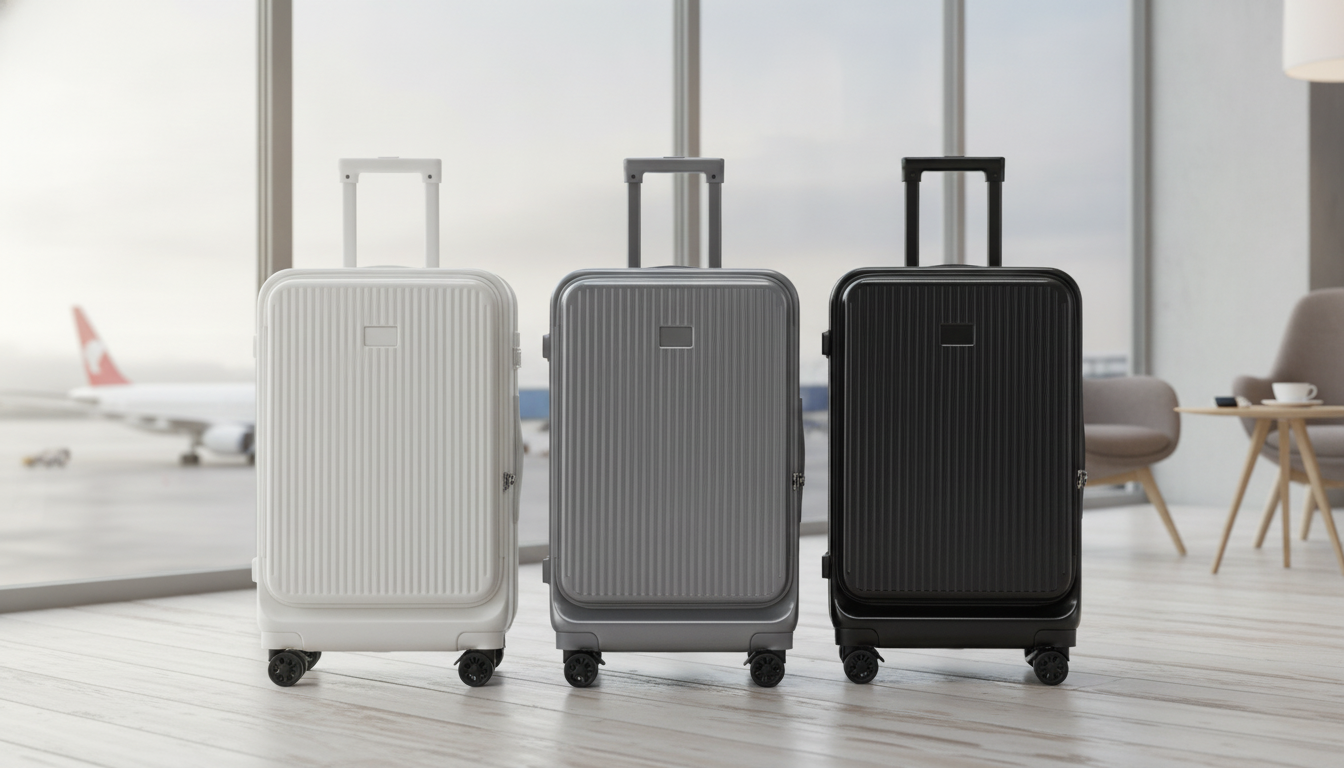
20-Inch Rolling Trolley Suitcase with Front Opening and Password Lock
A 20-inch rolling trolley suitcase with a front-opening panel is built for quick access to travel essentials while keeping the main compartment neatly packed. Add a password lock, and it becomes a practical option for carry-on travel, short business trips, and organized weekend getaways—especially when the day includes security lines, gate changes, and tight spaces where opening a suitcase fully is inconvenient.
What Makes a Front-Opening Carry-On Different
Traditional clamshell carry-ons often require you to lay the bag flat to reach anything inside. A front-opening design shifts that workflow: you can stand the suitcase upright and open the front panel to reach items you need during transit.
- Front-opening access can reduce the need to lay the suitcase flat in tight spaces like aisles, hotel entryways, or crowded terminals.
- A front panel is often used as a quick-access zone for items needed during transit such as documents, a light layer, toiletries (within rules), or small tech.
- Front-opening designs can support more “vertical packing” habits, helping keep the main compartment undisturbed when grabbing something on the move.
- A 20-inch size typically fits many carry-on requirements, but airline limits vary; checking dimensions and weight rules before flying prevents gate-check surprises.
Front-Opening Carry-On at a Glance
| Feature | Why it helps | Best for |
|---|---|---|
| Front-opening access | Reach frequently used items without fully opening the main compartment | Airport transits, train travel, quick hotel check-ins |
| Password lock | Adds a layer of deterrence and keeps zippers from sliding open accidentally | Busy hubs, shared transportation, overhead-bin storage |
| 20-inch carry-on size | Easier maneuvering and less waiting at baggage claim | Weekend trips, short business travel |
| Rolling trolley format | Less strain than carrying; easier pace control | Long terminals, mixed indoor/outdoor travel routes |
Password Lock Basics and Everyday Use
A built-in password lock is designed to keep compartments secured during handling and storage. It won’t make luggage invulnerable, but it does discourage casual tampering and can prevent zippers from creeping open when the suitcase is tightly packed.
- Set the combination immediately after receiving the suitcase and store it securely (for example, in a password manager) to avoid lockouts.
- If the lock is TSA-recognized (when applicable), security agents can open it using a special key; if not, inspections may require the lock to be removed—verify the lock type in the product details before travel.
- For smoother travel days, keep essential documents and chargers in the front area while reserving the main compartment for clothing and bulkier items.
For official guidance on travel locks, see TSA: Locks.
Packing Strategy for a 20-Inch Front-Opening Suitcase
A 20-inch carry-on rewards a “zones” approach: one zone for the trip itself, and one zone for the destination. This helps keep the bag tidy even when you’re moving quickly.
- Use the main compartment for compressible items (folded outfits, packing cubes) and place heavier items near the wheel side for stability while rolling.
- Reserve the front-opening section for items needed during the journey: boarding passes, a small toiletry pouch (within regulations), sunglasses, earbuds, and a light jacket.
- Group small accessories in a slim pouch to avoid loose items shifting behind the front panel.
- If carrying a laptop or tablet, confirm the front section is structured enough and sized appropriately; add a protective sleeve when uncertain.
For carry-on packing rules and restricted items, consult FAA: Pack Safe before departure.
Mobility and Handling: Wheels, Handle, and Balance
Even a well-designed carry-on can feel frustrating if it doesn’t roll smoothly or tips when it’s full. A rolling trolley suitcase is easiest to live with when it tracks straight and stays stable in motion.
- Rolling comfort depends on wheel quality and placement; smooth-rolling wheels reduce vibration and wrist strain on long concourses.
- An adjustable telescopic handle helps fit different heights and improves control when weaving through crowds.
- A well-balanced carry-on is easier to manage when fully packed; keep dense items low and closer to the wheel base to reduce tipping.
- For mixed terrain (curbs, cobblestones), rolling slowly and using the handle’s most stable height setting can improve control.
Durability, Materials, and What to Check Before a Trip
Carry-ons take the most “hands-on” abuse: lifted into overhead bins, pulled off luggage belts, and bumped through doors and elevator thresholds. A quick pre-trip check reduces the chances of a problem showing up at the worst moment.
When This Style Works Best
Product Options Available Now
20-Inch Rolling Trolley Suitcase with Front Opening and Password Lock
Alviero Martini Prima Classe Women’s Lace-Up Shoes
FAQ
Does a front-opening carry-on still need to open flat?
Not necessarily for quick access. The front panel is meant to let you reach essentials while the suitcase stays upright, though the main compartment can still open flat when it’s time to fully unpack or repack.
Is a password lock the same as a TSA-approved lock?
No. A password (combination) lock refers to how it’s opened, while TSA-recognized locks are designed to be opened by TSA with a special key during inspections; a non-TSA lock may be removed if access is required.
Will a 20-inch suitcase fit as a carry-on for all airlines?
Airline carry-on limits vary by carrier, aircraft, and route. Always compare the suitcase’s listed dimensions (and your packed weight) with the airline’s current carry-on policy to avoid last-minute gate-checks.














Leave a comment