Manual Dumpling Wrapper & Noodle Roller: Home Guide
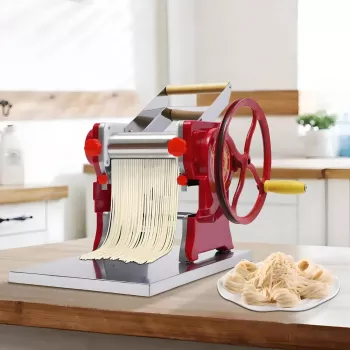
Household Manual Noodles Machine Commercial Dumpling Skin Maker
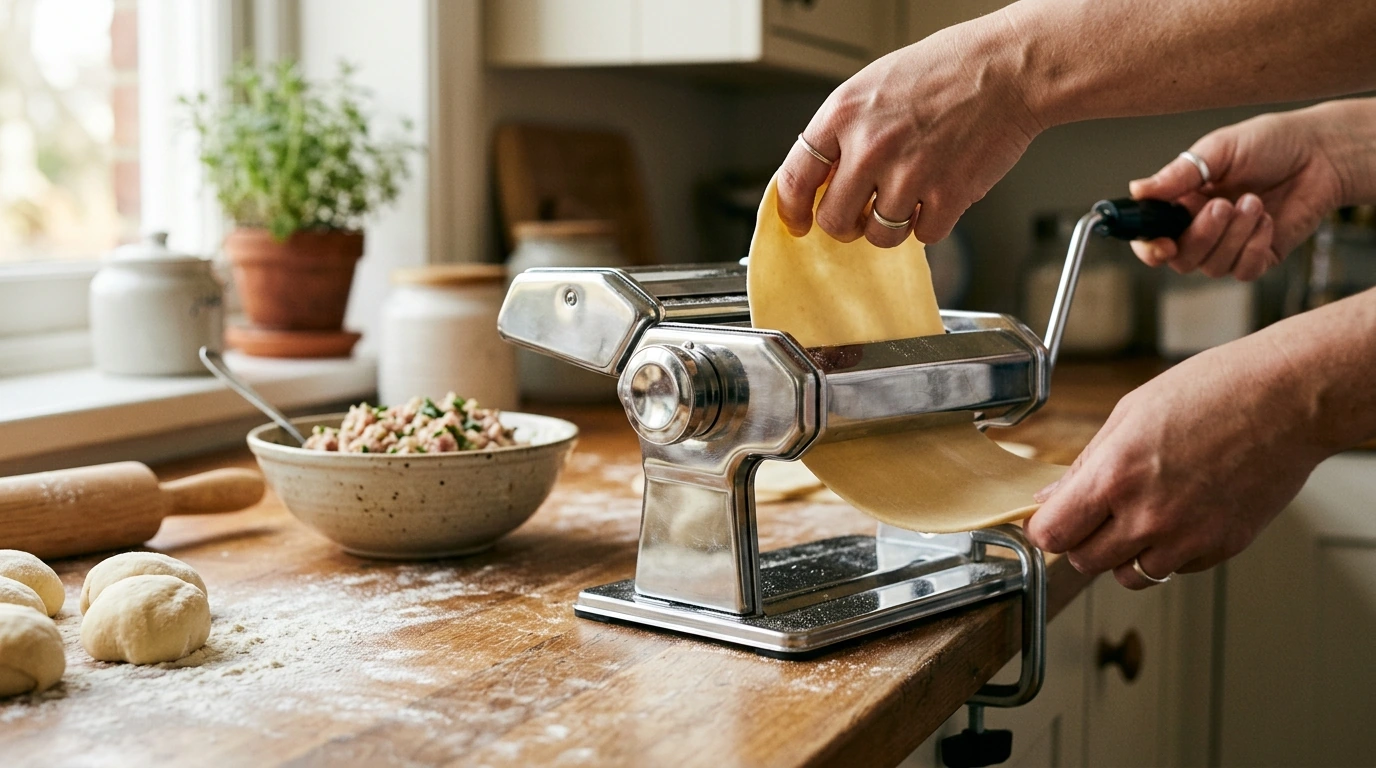
A manual noodle and dumpling-skin machine turns small batches of dough into consistent sheets, wrappers, and noodles without relying on electricity. For households that make dumplings often—or want a steady, repeatable way to prep noodle dough—this kind of hand-crank roller offers fine control over thickness, speed, and handling. Below is what to expect from a household manual unit designed for frequent use, how the key parts work, dough tips that make rolling smoother, and care steps that keep rollers clean and aligned over time.
What this machine helps make
- Dumpling wrappers: Even thickness for pleated dumplings, potstickers, and gyoza-style skins.
- Noodles: Roll a sheet first, then cut into strands depending on the cutter setup and the width you like.
- Flat sheets: Useful for wontons, hand-pulled-style dough prep (as a starter sheet), or layered pastries that benefit from uniform lamination.
- Repeatable results for batch cooking: Consistent thickness reduces tearing and helps fillings cook more evenly.
Key parts and how they work
- Rollers: Compress dough into a sheet. Consistent pressure depends on clean roller surfaces and stable mounting.
- Thickness adjustment: Stepped or dial-style settings control the gap. Gradual thinning helps prevent cracking and sticking.
- Crank handle: Manual power gives a slower, more controllable feed—helpful for delicate dough and thin settings.
- Mounting/clamp base: Stability is essential. If the base shifts during rolling, sheets develop ripples and uneven edges.
- Cutters (if included): A separate attachment or built-in cutter turns sheets into strands. Cutting works best with lightly floured, rested sheets.
Choosing the right setup for home and heavy use
“Household” can still mean frequent use, especially during dumpling sessions or meal prep. A good setup is less about speed and more about stability, repeatable settings, and easy cleanup access—because dried dough buildup is a common reason rollers start to feel rough or inconsistent.
- Frequency: Weekend dumplings vs. daily prep changes what “sturdy” needs to mean (clamp strength, metal thickness, and crank smoothness).
- Batch size: Wider rollers reduce passes and minimize seams when making many wrappers.
- Counter space and mounting: Confirm the clamp fits your countertop thickness and won’t collide with drawer fronts or cabinet lips.
- Dough style: Higher-hydration noodle dough needs flour control; stiffer wrapper dough needs stronger cranking and smaller thickness steps.
- Cleaning preference: Pick a design you can brush and wipe easily, and avoid washing parts that shouldn’t be submerged.
Quick fit check before buying or setting up
| Checklist item | Why it matters | What to look for |
|---|---|---|
| Countertop thickness | Clamp must grip securely without wobble | A clamp range that matches the counter; rubber pads help |
| Roller width | Wider sheets mean fewer passes for wrappers and noodles | A width that matches typical wrapper size goals |
| Thickness settings | More steps allow gradual thinning and fewer tears | Clear, repeatable adjustments with no slipping |
| Crank smoothness | Smooth rolling reduces stretching and uneven edges | Stable handle connection and consistent resistance |
| Cleaning access | Dried dough can affect roller grip and alignment | Open areas for brushing; surfaces that wipe clean |
Dough preparation for smooth rolling
Most rolling problems start with dough that’s either too wet, too dry, or under-rested. A manual roller is forgiving, but it performs best when dough is portioned sensibly and allowed to relax.
- Rest time: Let dough rest so gluten relaxes; this reduces shrinking and cracking as you roll thinner.
- Hydration balance: Too wet sticks to rollers; too dry fractures at thin settings. Aim for firm, pliable dough.
- Portioning: Divide dough into smaller pieces to reduce strain on the crank and keep sheet edges neat.
- Light flouring: Dust dough and rollers lightly. Too much flour can create dry patches and ragged edges.
- Pre-flattening: Press dough into a rough rectangle before the first pass so the rollers catch evenly.
For general technique references, King Arthur Baking’s dough guides are a helpful baseline for understanding rest, hydration, and handling: https://www.kingarthurbaking.com/learn/guides.
Step-by-step: sheets, wrappers, and noodles
When prepping fillings and dough together, follow standard food-safety practices for clean surfaces and proper temperature control. Helpful references include the USDA FSIS kitchen preparation guidance (https://www.fsis.usda.gov/food-safety/safe-food-handling-and-preparation) and the FDA’s consumer food-safety hub (https://www.fda.gov/food/buy-store-serve-safe-food/food-safety-consumers).
Cleaning, care, and storage
Troubleshooting common problems
When a manual machine makes sense
Featured picks available now
- Household Manual Noodles Machine Commercial Dumpling Skin Maker
- 7-Piece PE Rattan Patio Furniture Set with Cushions, Modular Sectional Conversation Set
- Cat Scratching Tower with Coconut Tree Design, Hammock, and Dual Levels
FAQ
Can the same machine be used for both dumpling skins and noodles?
Yes. Rolling a smooth sheet is the shared step; noodles then require a cutter attachment or hand-cutting. Wrapper and noodle dough often differ in hydration and rest time, so small adjustments may be needed for each.
Why does dough tear when rolling it thinner?
Tearing usually comes from dough that hasn’t rested long enough, is too dry, or is thinned too quickly by skipping settings. Rest the dough, reduce thickness one step at a time, and keep the sheet lightly floured and covered so edges don’t dry out.
How should it be cleaned after use?
Brush off flour and dough first (often easier once bits are dry), then wipe accessible surfaces and dry thoroughly. Avoid soaking roller assemblies or gear areas unless the manufacturer states they’re safe to submerge.













Leave a comment