78-Inch L-Shaped Executive Desk: Drawers + File Cabinet
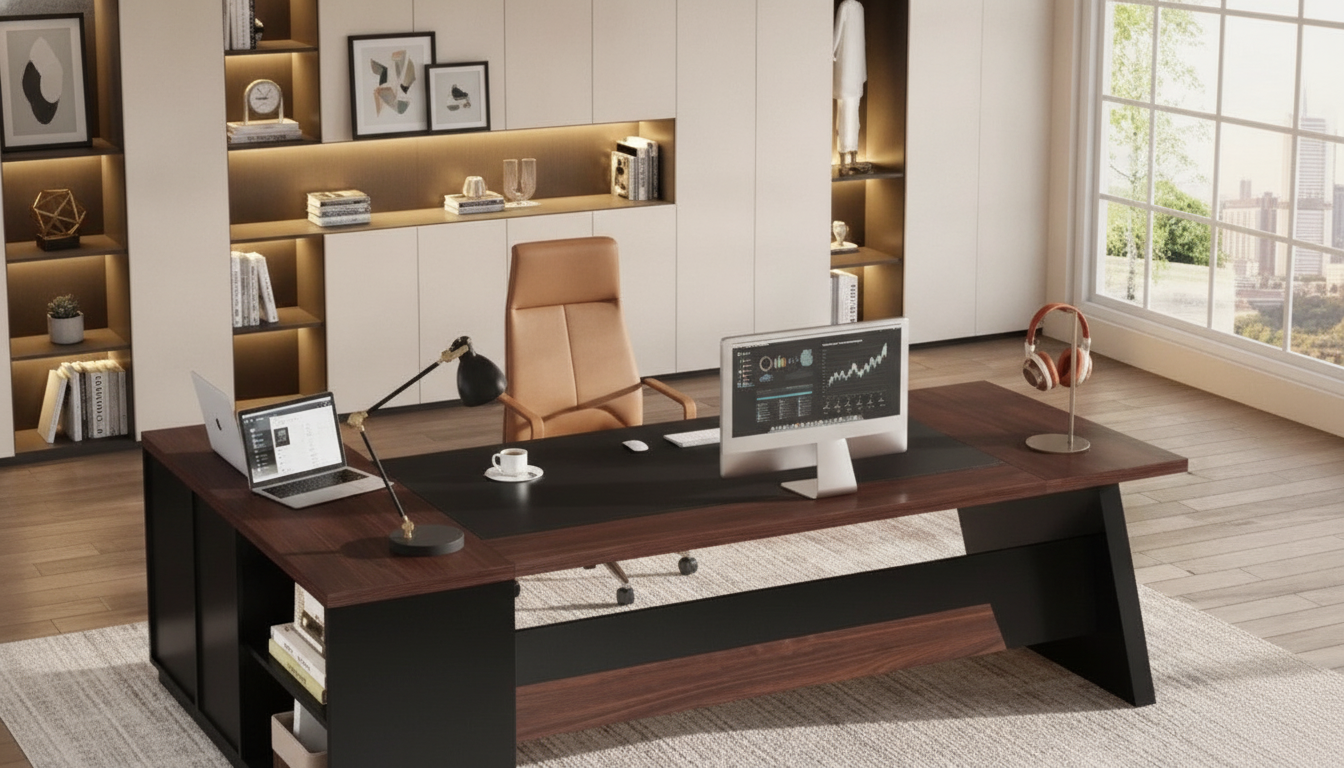
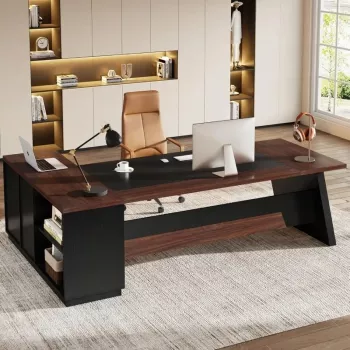
78″ L-Shaped Executive Office Desk with Drawers and File Cabinet, Industrial Style
A spacious L-shaped layout paired with built-in drawers and a file cabinet keeps daily work, devices, and paperwork organized without sacrificing a clean industrial look. This desk is designed to anchor a home office or executive workspace where surface area and storage matter just as much as style.
What This Desk Adds to a Workspace
The biggest advantage of a 78-inch L-shaped executive desk is how naturally it creates structure. Instead of constantly clearing space, you can keep the tools of your day out and ready—while still maintaining a professional, uncluttered feel.
- Two distinct work zones: The L-shaped footprint supports a computer-focused area on one side and a separate writing, reviewing, or meeting zone on the return.
- Executive-scale surface area: A larger top makes it easier to spread out monitors, a dock, notebooks, and active documents without stacking everything into a single pile.
- Built-in storage reduces extra furniture: Integrated drawers and a file cabinet help replace standalone cabinets that eat up floor space.
- Industrial styling that plays well with modern rooms: Mixed-material interiors, loft-inspired spaces, and contemporary offices typically pair easily with industrial lines and finishes.
If you’re ready to make the desk the anchor of your office, see the full product page here: 78″ L-Shaped Executive Office Desk with Drawers and File Cabinet, Industrial Style.
Layout Planning for an L-Shaped Desk
Before the desk arrives, a few quick layout choices can make the difference between “big desk” and “better workflow.” Aim to set up the L shape so it supports how you actually move through your day.
- Pick a primary side: Place your main monitor/keyboard on the longer, most comfortable side, and reserve the return for paperwork, a printer, or a second display.
- Keep chair clearance generous: Leave enough space behind your chair and along the return so you don’t feel wedged into a corner—especially if the desk is near a wall.
- Plan power and cable routing early: If you run multiple screens, a docking station, speakers, and a task light, map outlets and cable paths before final placement.
- Consider sightlines and confidence: Many people prefer positioning the corner so they can face the door; it can feel more natural for calls, meetings, and focused work.
Drawers and File Cabinet: Practical Storage Use-Cases
Storage works best when it’s intentional. When drawers and a file cabinet are right at your side, a simple system helps keep the desktop clear—without turning organization into a weekly project.
- Top drawers = daily reach: Use them for pens, sticky notes, a small notepad, chargers, and spare USB-C cables so they don’t live on the desktop.
- File cabinet = active projects and reference: Keep ongoing work, client folders, and frequently used documents upright and accessible to avoid paper stacks.
- Label lightly, but consistently: A short set of categories (Finance, Home, Projects, Reference) is often more sustainable than a hyper-detailed system.
- Printer support: If a printer sits on the return, store paper reams and spare cartridges in lower storage so refills are quick and friction-free.
Industrial Style: Materials, Color Pairings, and Room Fit
Industrial style tends to feel crisp and intentional—especially when the rest of the room supports it. The goal is balance: the desk should look substantial, not visually heavy.
- Coordinate with matte black and neutrals: Industrial design often looks best with matte black accents, neutral wall colors, and warm wood or concrete-like finishes.
- Keep wall décor minimal: To avoid a crowded feel, pair the desk with open shelving or a few larger pieces of art instead of many small items.
- Soften the acoustics: Add a rug, curtains, or acoustic panels to counter hard surfaces and reduce echo during calls.
- Limit metal finishes: Sticking to one or two metals (for example, black steel plus brushed nickel) keeps the workspace cohesive.
At-a-Glance Details
Quick reference for the core attributes shoppers typically compare before purchase.
| Feature | Details |
|---|---|
| Product | 78″ L-Shaped Executive Office Desk with Drawers and File Cabinet, Industrial Style |
| Shape | L-shaped |
| Overall size | 78 inches (as titled) |
| Storage | Drawers + file cabinet |
| Style | Industrial |
| Availability | In stock |
| Price | 635.17 USD |
Comfort and Ergonomics Setup Tips
A large desk is a great start, but comfort comes from the setup details—monitor height, reach distances, and lighting. For workstation guidance, see resources from OSHA’s Computer Workstations eTool and Cornell University Ergonomics.
Assembly, Care, and Daily Durability
More In-Stock Picks to Round Out Your Space
- 7-Piece PE Rattan Patio Furniture Set with Cushions, Modular Sectional Conversation Set
- Cat Scratching Tower with Coconut Tree Design, Hammock, and Dual Levels
FAQ
Will an L-shaped executive desk fit in a small home office?
It can, as long as you measure both wall lengths and leave enough clearance for your chair to slide back comfortably. Corner placement often works best, with the return running along the longer wall to keep walkways open.
What should go in the drawers versus the file cabinet?
Use drawers for daily tools and tech accessories you reach for constantly, like pens, notepads, and charging cables. Reserve the file cabinet for active projects, reference documents, and paperwork you want accessible without piling it on the desktop.
How can the industrial look be softened for a cozier room?
Add a rug, warm lighting, and a few soft textiles like curtains to balance the desk’s harder lines. Plants and consistent metal/wood tones also help the space feel inviting without losing the industrial character.












Leave a comment