10-in-1 Bundle Roadmap: Grow Your Online Business Fast

Grow Your Business Step-by-Step with a Practical 10-in-1 Roadmap
Building a reliable online business gets simpler when each move supports the next: validate an offer, set up the essentials, launch, then improve what’s already working. A 10-in-1 bundle works best when it’s treated like a structured toolkit instead of a pile of downloads—so your messaging stays consistent, your funnel stays measurable, and your weekly actions stay clear.
If you’re building from scratch (or rebuilding after scattered attempts), this step-by-step sequence helps you focus on one customer, one conversion goal, and one repeatable system at a time.
What the 10-in-1 bundle is designed to help you do
- Create a consistent workflow from planning to execution, rather than collecting disconnected resources.
- Speed up launch readiness with templates and guided assets that reduce guesswork.
- Standardize messaging across website, email, and social channels for a more coherent brand presence.
- Focus effort on repeatable systems: lead capture, follow-up, conversion, and retention.
- Support multiple stages: early setup, first sales, and ongoing optimization.
Step 1: Define a clear offer and a single outcome
Momentum comes from clarity. Instead of trying to sell to everyone, start with one segment and one primary problem. This makes your landing page easier to write, your content easier to create, and your emails far more relevant.
- Choose one target customer segment and one primary problem to solve first.
- Write a simple offer statement: who it’s for, what it delivers, and the timeline/format.
- Decide the main conversion goal for the next 30 days (email signup, consult booking, product purchase).
- Create a short list of proof signals to collect (testimonials, before/after, case notes, results snapshots).
Keep the promise specific enough that someone can quickly self-qualify. If it’s a service, clarify the outcome and what “done” looks like. If it’s a product, clarify what changes after purchase.
Step 2: Build your minimum viable funnel
A minimum viable funnel is the smallest complete system that can turn attention into leads and leads into sales—without needing a full website, a complex tech stack, or daily posting marathons.
- Pick one traffic source to focus on initially (organic social, short-form video, partnerships, or ads).
- Set up one landing page that matches one offer and includes a single call-to-action.
- Create one lead magnet or entry offer that naturally leads to the main offer.
- Connect a basic email sequence: welcome, value, offer, reminder, and follow-up.
- Use consistent naming for campaigns so performance can be tracked without confusion.
If you’re new to email, a practical baseline is to follow reputable guidance and keep it simple—clear subject lines, one main idea per email, and one call-to-action. The HubSpot overview is a strong starting reference for fundamentals: HubSpot: Email marketing basics.
Step 3: Launch with a simple content cadence
A launch doesn’t need to be loud; it needs to be consistent. A steady cadence helps you build signal over time, while a short sprint (two weeks) prevents you from constantly rebuilding before you have usable data.
- Choose a weekly cadence that is sustainable (for example: 3 short posts + 1 longer piece + 1 email).
- Reuse one core idea across multiple formats to reduce creation time.
- Create a “message bank” of hooks, objections, benefits, and proof points to rotate.
- Set a 2-week sprint: publish, measure, adjust—avoid rebuilding everything mid-sprint.
Two-week launch cadence example
| Day | Asset | Primary goal | What to measure |
|---|---|---|---|
| Mon | Short post/video | Attention + positioning | Views, saves, profile clicks |
| Tue | Landing page tweak | Conversion lift | Opt-in rate, bounce rate |
| Wed | Email #1 (value) | Engagement | Open rate, clicks |
| Thu | Short post/video | Lead capture | Link clicks, signups |
| Fri | Email #2 (offer) | Sales/Bookings | Replies, purchases, bookings |
| Sat | FAQ post | Objection handling | Comments, DMs, clicks |
| Sun | Review + plan | Optimization | Top content, top sources |
Step 4: Turn the bundle into an operating system (not a one-time download)
Step 5: Track only the numbers that guide the next action
For dependable guidance on building discoverability and site basics, use established documentation such as Google Search Central: SEO Starter Guide. For broader small-business marketing structure, the U.S. Small Business Administration: Marketing and sales hub is a helpful reference.
Step 6: Improve with a 30-day experiment loop
Who benefits most from this 10-in-1 approach
Featured products (in stock)
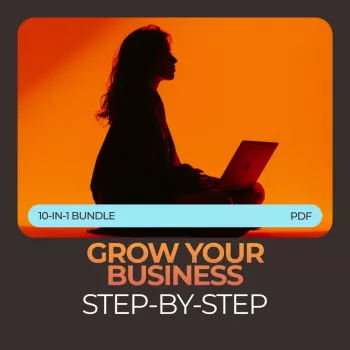
- Grow Your Business Step-by-Step: 10-in-1 Bundle for Online Success — a bundled toolkit meant to support a structured, sequential build—from setup to launch to improvement.
- 7-Piece PE Rattan Patio Furniture Set with Cushions, Modular Sectional Conversation Set — a comfortable setup for creators who like working outdoors or hosting casual planning sessions.
- Cat Scratching Tower with Coconut Tree Design, Hammock, and Dual Levels — a practical add-on for pet-friendly workdays so distractions don’t turn into derailments.
FAQ
How long does it take to see results using a step-by-step bundle?
Most businesses start seeing measurable movement in about 2–8 weeks, depending on how clear the offer is, how consistently you publish, and how quickly you drive targeted traffic. Results come faster when you stick to one channel and one funnel until you have enough data to improve.
Do you need a large audience to make a bundle-based launch work?
No—conversion systems matter more than follower count. Start by driving focused traffic through partnerships, consistent short-form content, or a small paid test so you can validate the funnel and messaging with real clicks and signups.
What should be set up first: the website, the email list, or the offer?
Start with offer clarity first, then build a simple landing page and email capture to collect leads. A full website can come later once you’ve validated what messaging and format actually convert.













Leave a comment